Beyond Toxics

An internship program trains students on the legacy of pollution in marginalized communities and their power to affect policy reform
In 2022, the J.H. Baxter wood treatment processing plant closed. For almost a century, the plant had dumped toxic creosote in the low-income, diverse West Eugene community. Creosote contains persistent organic pollutants and is a carcinogen, and when J.H. Baxter incinerated it for disposal, they also unleashed dioxins, which are linked to several cancers. Many years of community organizing and thousands of filed complaints later, J.H. Baxter finally shuttered its doors, but the plant left the burden of lasting pollution in its wake.
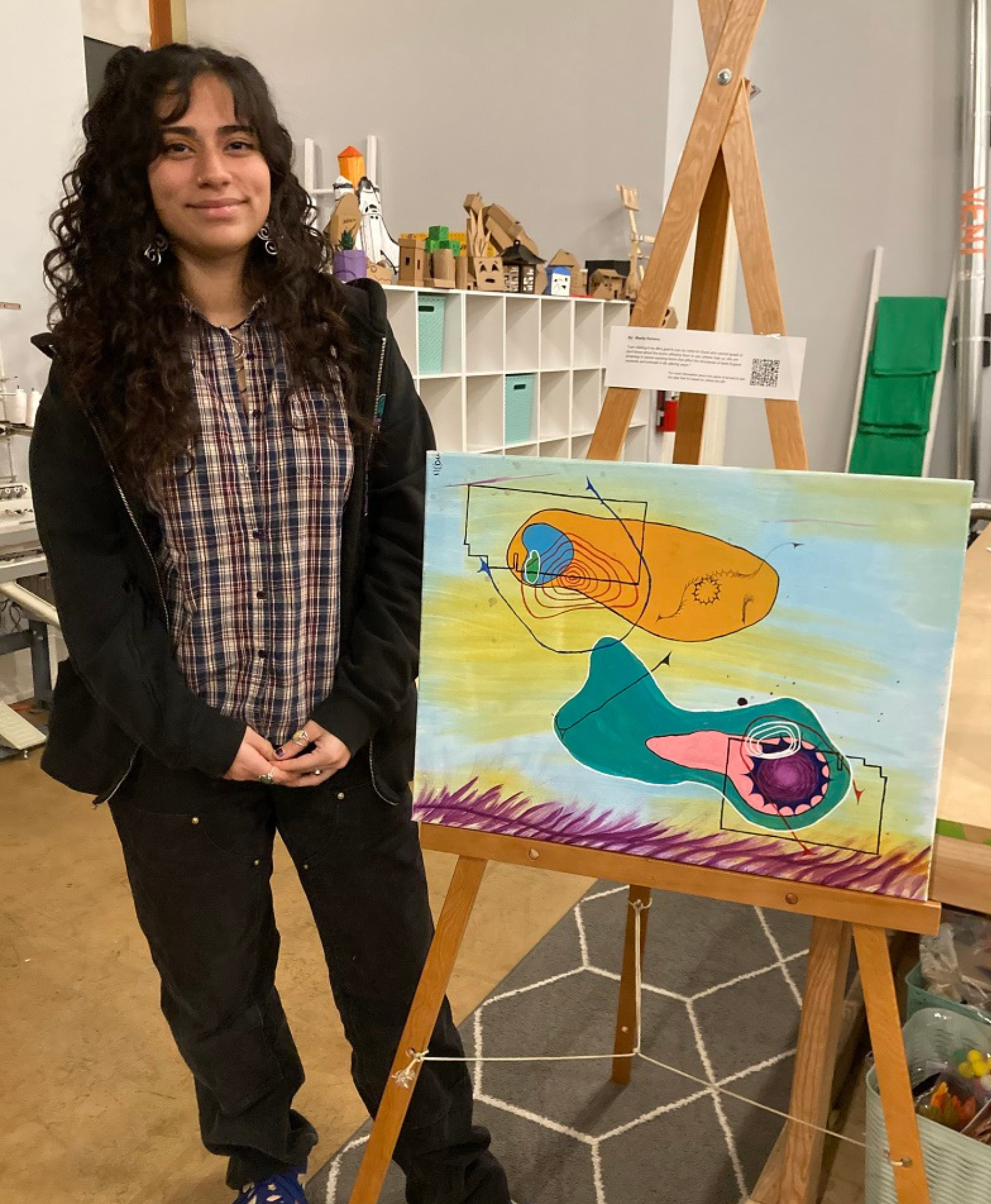
“Just this last year I was informed about J.H Baxter and their doings,” Kalapuya High School student Metzley Romero wrote in 2024. “This infuriated me but mainly left me in fear for myself, my family, friends, and pets. I am making it my life’s goal to use my voice for those who cannot speak or don’t know about the toxins affecting them to say, ‘please help us.’ ”
Romero was one of a cohort of students at Kalapuya High who decided to create artwork based on the data sets available about the stain of pollution left on their community. Their work was shepherded by Beyond Toxics, a nonprofit that works in Eugene and throughout Oregon to build community leadership and fight against toxic pollution.
Beyond Toxics began in 2001 in response to the blanket of smoke that covered the Willamette Valley and sickened locals every summer when grass farmers burned their debris. This was their first of many battles to face down industry and demand political action for transparency and protections for public health, including cleaner air and less toxic pollution. Repeatedly, the first leaders of the organization found themselves in city or state council meetings where legislators were more concerned about upsetting industry than protecting community health.
Over the last two decades, the nonprofit has maintained its environmental commitments to clean air, water, and soil, but more clearly oriented itself around one brutal reality: communities of color experience more pollution and have less of a seat at the table. Beyond Toxics recognizes that the only legitimate response to this systemic racism is to empower the communities most impacted and ensure they have a voice in every room where decisions are made.
Today, Beyond Toxics is fueling a grassroots movement to embed environmental and climate justice into policy reform at all governmental levels. Fifty percent of the staff are black, indigenous, and people of color from the communities they advocate for. “We can't reduce the systemic inequities throughout Oregon when they’re not at the table, voicing their perspectives,” Krystal Abrams, Program Director, tells me. Beyond Toxics acts as a watchdog and brings constituents to the legislature, to enter rulemaking, and into state agency meetings, including the Department of Environmental Quality and Oregon Department of Agriculture. “We always pay attention to any policies at the legislature that would impact public health.”
Beyond Toxics’ work has other facets as well, including helping the most impacted communities access air filters, protecting natural areas, and fighting against pesticide exposure—any projects that move us towards a safe, healthy, toxic-free Oregon for all.
I can’t imagine this movement succeeding without youth buy-in and the actual opportunities for real leadership there,
Abrams continues. Two to three times a year, Beyond Toxics staff lead a ten-week paid internship called Rise as Leaders for high school and college students. Their recruitment with local partners and at specific schools means 90 percent of Rise as Leaders participants are Black, Latine, and tribal members. Each Saturday, the cohort of 12 to 15 students meets in person. Beyond Toxics staff lead workshops, take students to visit partner organizations, and connect them to local Indigenous leaders. Across the ten weeks, they underscore the principles of environmental justice, the importance of being attuned to disturbed environments, and the power of nurturing respect and accountability for their communities. Students undertake data collection, field work, and self-directed art projects like the visualizations Romero and others made of J.H. Baxter’s toxic legacy in their neighborhood.
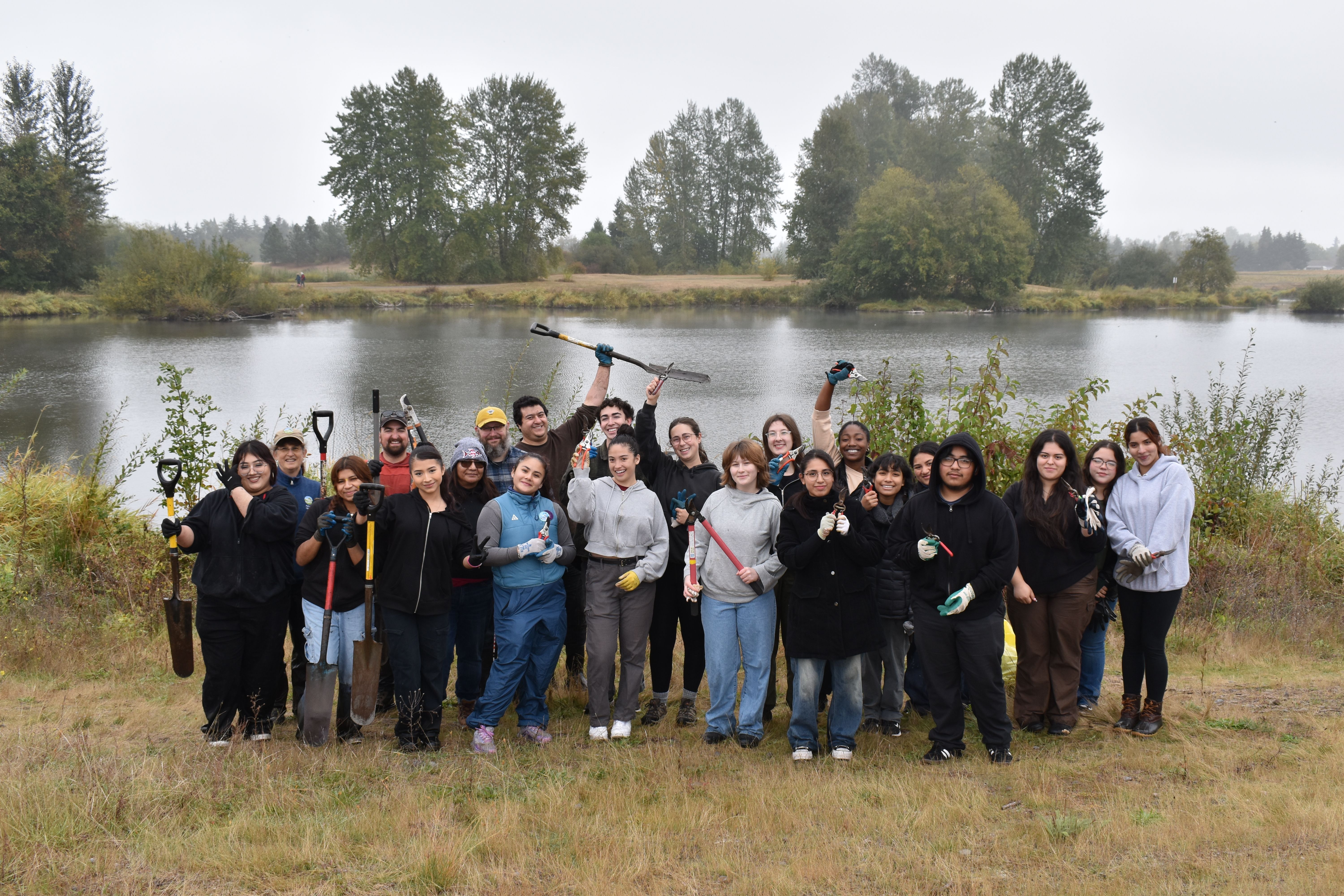
All this work is vital, but what sets this internship apart—and what their staff uniquely provides—is an insider’s view to how public policy happens. This coming winter, the staff is trying out a new approach for the internship by breaking the session into two five-week halves. During the first, in the fall, students will prepare for the upcoming legislative session alongside Beyond Toxics’ staff. They’ll ground themselves in advocacy work and planning. After winter break, the cohort will return in January alongside legislators.
“Students can come back and actually hit the ground running with some of their plans,” Abrams explains.
What does it mean to draft comments or give testimony? What is rulemaking? How do you get others involved? The answers to these questions are often obtuse to those who aren’t inside the system. The halls of state lawmakers can be rarified, unwelcoming spaces. But these students will have the best, most experienced guides. And we all benefit when youth rise.
Helpful Resources
To learn how you can join Beyond Toxics’ strategic fight for a safe, healthy, toxic-free Oregon for all, sign up for their newsletter and explore their website at beyondtoxics.org. You’ll receive action alerts with engagement opportunities and stay abreast of legislation they support.